Search

What is in my Flask

thoughts on life from Brian Van Brunt

Author

whatisinmyflask

11. Pessimism

11042989_707181111823_4270396138713720830_n
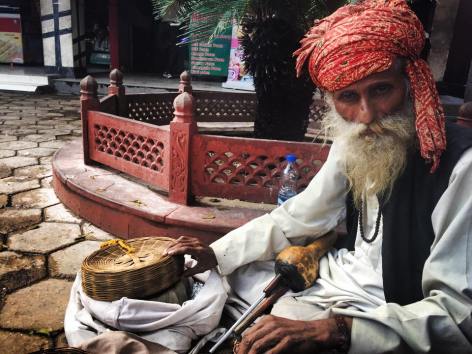
Snake Charmer, India 2015

I generally feel like I’m a pretty optimistic person. If I’m negative, I try to keep it critical and tied to the reality that is going on. I think it’s part of my ENFP Myers Briggs tendency. Not to mention those strength finder qualities:  Ideation, Activator, Maximizer, Positivity, Woo (YEAH WOOO!!!!).

But sure, there are some exceptions to the rule.

Guy: “It doesn’t bite.”

Me: “I don’t want to hold the snake.”

Guy: “It doesn’t bite. Here.”

Me: ” I don’t want to hold the snake.”

Guy: “next I get cobra.”

Me: holds rice snake.

Those who know me would attest to my tendency to look for solutions, positives and opportunities in even the bleakest of situations. If anything, I struggle with people who are overly critical or pessimistic. I know it sounds bad, but I often see them as obstacles in the way of progress. While what they have to say might very well have merit, I get all Simba and Rafiki about dweling on the past or problems. They are to be learned from and offer the map to do better in the future. Otherwise, its just about getting cuaght up thining too much about the stick that hits you in the head.

This doesn’t mean I don’t get sad. I do find myself more sad and broody on my travels as I go around the country. I don’t get quite as bad as American Beauty, staring off at the plastic bag on the sidewalk, but I do find myself more introspective and often concerned with the fate of things. This has certainly been worse as my travel has increased and Senior Douche-face took the white house from Barrack (also, could he be happier right now? Did you see the story where he is like kite-surfing or something with Richard Branson? You go, Obama. You go, Glen Coco.).

3cec606700000578-4199624-image-a-10_1486471290322

So, I suppose the take away for me is identifying those times where I find myself overcome with the negative. For me, broody is a good word. And I don’t want to remove this part from myself, I like this introspective part. I think here it is more a matter of balance. Not allowing sadness to overcome and lead to pessimism or hopelessness. Maybe even anger.

I know many of my friends have written about the political change with Trump in office. And I certainly is something that becomes one of the first things I check now each morning. It’s hard to see his lack of grace, isolationistic policies, greed and arrogance and not fall into a pessimistic place. Social justice, equity, and helping those in need are core tenants for my Christianity and humanism. So yes, it’s hard to remain optimistic.

But I don’t want to write about that. It just feels too big. Done too well by other people who feel passionate about these issues. I suppose my goal here is to work harder on seeing the positive in difficult situations. Not getting too analytical about why people behave the way f behavior, but instead focus on some of those good, old fashioned core qualities Roger’s talks about. Believing in the goodness of people, removing obstacles to growth and understanding we are all, sometimes in broken and troubling ways, striving to become something better.

That, and I suppose if I’m going to get deep for a minute, the importance of not letting pessimism keep us from exploring the world around and taking chances. I think that is the true message behind this one. Pessimism keeps us from reaching towards our dreams and goals. Its our fear and worry about negative outcomes. So maybe that’s also something I’ll think on.

To conclude, no discussion of pessimism would be complete without this little gem from our friends across the pond.


“When you are chewing on life’s gristle, don’t grumble, just whistle.” #lifeofbrian


10. Stinginess

291483_574466378213_1491487429_o
Downtown Denver, 2012

Hey all. It’s been awhile. Sorry about that. First off, the flask. Coming back from Little Tokyo in LA, I found this great shop that carried some amazing Japanese whiskeys. So, this one made it back home with me and into my flask: Hibiki Suntory whiskey: Japanese Harmony.

Stinginess initially makes me think of holding back. Not giving your all. Or maybe the idea of holding back with some deeper purpose. Like holding back out of fear or a desire to make sure you are full first. The easiest place to get stuck for me exists in two places. First, the temptation of giving lip service to being generous, but holding back when it comes to those places where it hurts to give. It reminds me of the Bible story I learned as a child about the Widow’s mite. The widow who gave almost all she had and it was just a very small amount compared to the rich folks who gave more but it cost them way less. This might apply as well to those who can give money, but are hesitant to give time. Those who can give their time, but are reluctant to give money. I suppose when it comes to being stingy, it’s worth thinking about how carefully we guard what we treasure. And what we are truly willing to give that comes at a cost.

The second thing that comes to mind is the benefit to being seen. If the opposite of stinginess is being gracious or generous, then isn’t there a gain to this when we are seen this way by others? Doesn’t this create a sense of distance or being owed? So, if I truly want to practice the avoidance of being stingy, I suppose this should start with a willingness to part with things that others desire from me. A sense of giving.

I can’t recall if it was middle eastern concept or not, but I remember growing up watching bugs bunny. And I remember something about an episode where someone visited someone else’s house and there was this custom if you admired something, they gave it to you (I have this vague memory of Daffy Duck carrying away a bag of things when he abused this rule). This may have all happened in my mind. I clearly need to re-watch some TV.

Anyway, so I find myself reflecting on this idea. The giving away of things, not for personal gain or some spiritual good karma, but more as a practice of being thoughtful regarding the needs of others while also remembering not to hold onto anything in this world too tightly. And maybe that is the lesson about avoiding stinginess. It keeps the you from being too attached to your own needs, your own things and focused more on the pleasure of others.

I suppose with anything; I can take this concept too far. Giving away all possessions and ending up avoiding my responsibilities to my wife and kids, my friends and work. There might be a purity in that, losing possessions and living an ascetic life. A favorite book of mine given to me by a friend early in my career is the Wisdom of the Desert Fathers. This encapsulates some of these ideas of sacrifice and focus on a world other than this one.

But then again, there is also something in living up to the attachments around us that we nurture and love. Perhaps the lesson here for me is that these attachments are should not be limited, but expanded. There was this graphic that went around the internet a few months back about making a bigger table. Let me see if I can find it here.

051316-podcast

That we are more when we give more.

So, with that, I’m off to share my Hibiki Suntory with any who are interested.

9. Manipulation

10653523_681045268263_5912490047013019276_n
Torchy’s Taco, 2014

This brings forward, almost immediately, the idea of controlling or attempt to control someone else for your own means. I think back to 7th grade science class when we talked about symbiotic and parasitic relationships between organisms and I suppose it isn’t too far-fetched to see a manipulation of another for one’s own end slighter better when this is symbiotic rather than parasitic; helpful or neutral rather than harmful.

Of course, we must wonder about ‘being helpful’ by whose standards. Almost every war or battle fought has been justified in someone’s mind that it is in self-defense, preservation or for the greater common good. While most would agree that outright manipulating others for your own good at their expense is a bad thing, I’d argue for me the devil is in the subtler details of fooling myself that I am helping myself under the guise of an altruistic end.

One of my favorite plays is Les Miserable, and I’m a sucker for a good ‘Master of the House.’

“Glad to do a friend a favor, Doesn’t cost me to be nice….But nothing gets you nothing, Everything has got a little price!” The song, if you aren’t familiar, highlight describes the master of an inn who appears to care and give, but is just about filling his own pockets.  This is a manipulation to be avoided.

The subtler form, I suppose, is when we fool ourselves to think our good deeds to help others is of pure intention when it ends up doing some larger harm or profiting only ourselves. The crusades would be a good example of this. The German holocaust. Even the devil himself was an angel once.

So, I reflect on this. Let me assume I can avoid outright manipulation of another for my own desires. Let’s even go so far to as to assume when I do good for others, I can put aside my own ideology or philosophy for a bit and truly empathize with what they need now and truly provide help or subsistence. The tricky piece for myself would be those times I help others and receive something in return. Pay, good will, status, even a positive recommendation leaves the opening this was done, at least in part, for my own benefit.

So, when do going for others, is there a way I can do that without the need for repayment or accolades? Can it be done in secret, or at least privately, to avoid this risk?

I suppose something I can work on and think about. For example, I like being generous. But I also like being a generous person. I don’t confuse generosity on my part with good deeds or altruism. My generosity has gains for me. Perhaps a purer way would be to give to others outside public view.

Which, raises a bit of mind fuck for me at the end. I’ve struggled some with seeing my Christianity as something that is truly humanistic and good, when it is done (even in part) to avoid hellfire and damnation?

I remember something my Old Testament professor said once at my college. Dr. Buehler said something like, “The true test of any faith is found when you ask yourself, ‘Would you live the same way if there was no reward or punishment after you die?’” Is the faith you hold, the action it drives, worth it apart from these motivations? And if not, is it faith or bargain with God to avoid punishment.

“Welcome, Monsieur, sit yourself down….and meet the best innkeeper in town…”


8. Faithlessness

img_1120This was an odd term for me. Another one of these words you don’t hear very often. I thought about the opposite of it, faithfulness. And then other words like steadfast and commitment. But I wasn’t quite sure that resonated with me. I found myself thinking more about the simple act of believing. Believing in something, like God, love, the inherent goodness of people.



To think about this, of course, I had to listen to this song by Poison.

Victor Frankl writes about this some (not, you know, the epic 80’s hair band Poison), having something to believe in. His approach to helping, called Logotherapy, stresses the importance of finding something in life to in a powerful way, or to create something that leaves a legacy beyond your life or the giving back to others.

Hauerwas writes about this as well in his book Naming the Silence, stressing the importance of finding those larger meanings as a light against the darkness. Faith, it seems, helps give purpose and meaning. It helps pull us up beyond the everyday.

There is a stability when you have a sense of faith, when you have something to believe in. I suppose part of the trick is to find that something that has some deeper positive meaning. Something that doesn’t hurt others in the process. I think that’s why I find some peace in Humanism and Utilitarianism.

Perhaps it’s why I’ve recently struggled more (alas, always a struggle) with the idea of simple belief in the Christian faith being the stalwart against Hell and darkness. How much we depend on calling out whether we like Alabama or Clemson, akin to declaring ourselves for heaven or hell (pardon any unintentional demonizing of your favorite sportsball team). Does the simple commitment, paint your face and cheer for the right side quite to everything being well? I suppose everything feels safer when you look around to the fans next to you every Sunday singing the same hymns, making the same tomahawk chop (again, sportsball newbie here, so forgive the microaggression against our native brothers and sisters, I just don’t know that many team chants. Rock em, Sock em, Jayhawks? Maybe something about chalk.Or robots).

And this leads back full circle, to people who take advantage of those in need rather than helping them. Shouting at the sinners in the hands of an angry god or TV evangelism hypocrisy of, “He tells me to believe in Jesus, and steals the money from my hand.”

I’m not sure where this turned into a pushback on my Christianity, though strange I’m always drawn to that so quickly. It’s hard to separate that from my upbringing versus conservative Christianity. The idea of that different thoughts or questions are valid. Like simply the questioning in what I believe being some kind of lack of strength or refusal to drink the kool-aid.

I suppose for me, faith is belief. Hope. Intentionally reaching. Wandering the maze, if you will.

I’ll end with this, remembering a trip to Saudi Arabia where I had a chance to walk through a mosque. I was struck by the similarities between the faiths, Islam and Christianity. How we build these places to reach for something more. To create something holy that points, like a compass toward something greater than ourselves.

But that’s the thing with looking at a compass, right? We sometimes lose the focus on the journey for the destination.

So for me, give me love. Give me kindness and humility. Give me teaching and the search for deeper truth.

Give me all of that.

And give me something to believe in.

7. Dominance

11178199_714637908343_7954891037676995656_n
Molly, 2016

There is a need that the psychologist who developed reality therapy describes her related to achievement and power. The idea of having a mastery over your domain. Nietzsche calls this a will to power, need for people to make their mark on the world, to make will manifest. This is what comes in mind when I ponder the term dominance.

There was an article that came to me from the Lion’s Den, a magazine dedicated to Buddhist ideas.   It described six things that are useful to achieve a sense of inner peace. The first was turning all mishaps into the path. I liked this idea. That problems, change, loss, suffering victory, fortune–all are on the path and are seen best because of fate. These are things that cannot be changed. Pushing against an unmovable object, or something out of your control, yields little productive action or thought. Better to be the like the reed in the wind. To yield to external forces and put aside expectations.

Dominance then becomes a problem as the individual (me) asserts that my way is better than other’s approaches, beliefs or ideologies. I then seek to make me desire real at the sake of other’s thoughts or desires. That my way is better, either as a selfish/narcissistic desire or a more noble shaping of another to what I see as a more productive, lucrative, wise, efficacious place. In either case, I’m reminded of the humanistic therapist Carl Roger’s who writes at length about the limits of our abilities to control others. Even when we have what seems to be the best way, or ideal solution, it is always limited by our subjective experience and may not be portable to another.

There are certainly structures in my life that require some form of dominance. Parenting and ensuring the snow gets shoveled, the kids go to the doctor, the house is in good repair. These require me to act based on what is in my mind as best for a given situation. To dominate. The bystander intervention work that I teach college students is a good example of this. The idea of intervening (dominating) a situation with my views to protect another.

This makes me think there is both an altruistic dominance– where the person acting in a dominant role does so in a beneficial manner, as opposed to a more selfish dominance that is forged in lack empathy or a larger sense of social justice. Perhaps these are necessary evils, though I can imagine both have the potential for vast injustice and harm. So many well-meaning altruistic put their version of the truth in dominance over others. And, perhaps easier to spot, those who seek to dominate for their own greed and desire and no larger purpose.

Then there is workplace dominance. Taking control for a company, economic gain or some larger purpose like education or enlightenment. It could be said that the classroom is dominated by the teacher in an altruistic sense to create structure and maximize learning. It would seem hard to live without some form of dominance in terms of putting your need above the needs of others for the betterment of social order or achieving a goal such as training. However, that’s where the devil lives in the details, isn’t it? To assume that my way is the best way.

One of my favorite stories is from a Universal Unitarian church we attended. During a talk, the leader asked the congregation to break up in groups. One of the outspoken members (not me, this time) spoke up and said, “I don’t feel comfortable breaking into groups until I know what the larger purpose of these groups will be.” There was something in me that immediately resonated with this sentiment. The idea of submission to another requires trust, respect, apathy or fear. It brings out that anti-authority part of me.

This entry seems to have become more of a thought piece. Suffice to say, I think for me, the application here is being aware of when I assert my will in a dominate fashion and being more selective when I do that. I’ve thought next year of doing a retreat where I was just silent for a week or so. Without talking. While there is nothing inherently bad in talking, I wonder if this exercise in silence would lead to a deeper understanding of listening.

With dominance, I wonder if avoiding dominance for some time would lead likewise to some deeper understanding of humility, equanimity and peace.

I’ll let you know.


6. Ambition

emily_beach
North Carolina, 2011

I had an hour-long call with a marketing company that helps you better advertise your books and materials. So, when I got off the call and looked at today’s concept, I chuckled some to myself. “I’ll make you famous, kid.”

It there a theme developing here? Like in some way this middle ground, a Goldilocks principle of not being too hot or too cold? Is there a point where you have enough? Money? Fame, ambition? Where you just hit the pause button on the rate race and just chill for a while?

It feels hardwired into us, I think, the idea of wanting more or worrying that sitting back and just chilling equates with the slow movement towards loss and de-valuing. It growth always a requirement to expand and take over? Or should sustainability be more of goal? Is the idea that we push for more because that is our way, or we pause and reflect at some point and just say “you know what? I think I have enough.”  Enough is a powerful word.

While ambition drives us from our little fishy, footless-wandering beginnings out of the primordial—does it always put us into a better place? Is there a point where our ambition is counterproductive to our sense of peace?

I think ambition is here more because it primarily hinders our larger sense of equilibrium and balance. To be too ambitus is folly. I’m not sure I subscribe fully to the idea that any ambition necessarily equates with a problem, but maybe it is something that demands being kept in check some.

While I think others would describe me as ambitious in my work, I have tried to install some of the exact opposite attitudes into my kids. That they should instead follow their inner desire to sort out their happiness, rather than pushing them hard to that work or academic rat race.

And of course, in some ways, this is easier because of privilege again. Not everyone can provide a house for their kids to take the easier path moving forward into college, a job or life. And maybe they would all want some more installation of ambition. Helping them climb the ladder of success and to the be the very best they can be.

I suppose everyone has these questions and regrets, particularly manifest in their children. Did we push them too hard? Not hard enough? What values did we instill? Are they the values that we the parents had—is that a good thing considering the different kind of world they live in now?

This one leaves me a bit more with more questions than answers. But for now, I can contemplate my ambition for myself and think about how much is too much. And perhaps, when I pause in reaching for the next, perhaps there is something in that quiet moment that speaks to me as well.

5. Dispomania

10641024_312418462262728_9011218469298471961_n
The Worm, Tequila Bar, San Antonio, 2013

So, drinking. Alcoholic. Craving alcohol. That stuff.

I’m just going to following Hemingway’s advice to never open a new bottle of alcohol, just drink what is around. That seemed to work out for him. Well, now that I think about it…

Drinking, I think, is something that I can take or leave. I maybe drink to feel a buzz 1-2 a month and can recall on one hand the number of times a year I have been over the legal limit. My preference is usually a drink or two of whiskey or scotch—or some other bitter cocktail. I tend to like the taste and the exotic nature of those kind of drinks. Wine is enjoyable sometimes at dinner and I am a fan of bubbles and prosecco.

I don’t know that I have ever craved alcohol. I think when I’m stressed, I lean more to craving sleep or shutting down some. I suppose there are times where having alcohol paired with events like Christmas or Thanksgiving—maybe there was some anticipation. But I think I’d describe that as different than a craving.

I think some of my public persona is someone who drinks more than I do. Some of this it related to the drinks I like. Stronger and more flavorful spirits like Campari and absinthe. Things that go along with the idea of alcoholism. That and I think when I do drink more, its usually in a social setting with friends. And that is when we tend to drink a little more (I’m looking at you BVB Palooza). So, people tend to assume I drink that way all the time.

But why is this on the list to begin with? I think it is more about the idea of tuning out from experience, dulling your senses and distracting yourself from unwanted thoughts or unrealized dreams. There are times when drinking for me became a way to lower inhibitions or change my mood when I was feeling sad or lonely. I suppose this is not as bad as trying to drink to enhance emotions, to relax and to have a better time then you might without alcohol. Although, I’ve working with enough college students in counseling to know that drinking to relax can be a problem as well. I used to say in my trainings to those bad boys and girls who got caught on campus drinking too much, “think about the times you drink. What emotions are you having? Like overwhelmed? Stressed out? Happy? Now think about that emotion and ask yourself if every time you feel that way you turn to drinking.”

So, I suppose it comes down to moderation in some aspect. Drinking to enhance or to relax, but not ever time. Drinking to enjoy experiences or to be social, but also having fun social times without drinking. Its finding that middle ground.

Cheers!

Oh, I forgot. So, my flask. Jameson Yellow Dot. Delicious. And Silver Oak traveling with us for dinner tonight with some close friends.

4. Ingratitude

13718624_779015894343_7066576146201366720_n
Manchester, 2016

I see you, universe. Out there saying stuff.

So, ingratitude. I can say with clarity that this comes from the expectations we hold on others. We become ungracious when we have expectations for something more than what we receive. When I expect something from someone else and when I don’t receive what we expect, then I become frustrated at them. This can lead to anger and rash action. Worse, it leads to disappointment, sadness, and a sense of greed and “being owed.”

The world owes us nothing. Anything we have is temporary. Focusing on what is not, rather than what is leads to a dissonance. A sense of ingratitude for what we do have.

I’d like to think I’ve made it to the point where I get mad when people don’t live up to my expectations, rational or irrational, but then I have developed this little bit of wisdom. This little part that lets me just be mad for a bit. Reach out to the people I love. Feel supported by them, and then just Elsa that shit. You know?

Let it go.

Then focus on the good around me. Be gracious for that.


3. Gambling

6993_161152050722704_1857074994_n
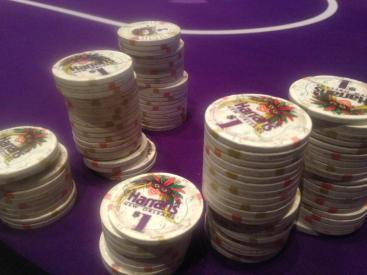
Harrah’s New Orleans 2013

I used to gamble more—but don’t so much now. There was a group of us at New England college about fifteen years back that would have a weekly poker game. It was fun and less about the gambling and more about the hanging out with each other. There were sexually positioned action figures, pirates, poker bitches, and the occasional student life emergency consult.

I think gambling is probably a two-fold vice. First, there is the gambling addiction part to make money and be rich. That chasing of a dream and acquiring something that others possess. Maybe this was a problem a little more earlier in my life. The idea of gambling to have some extra fun money. At the casino or with a friendly poker game. But the stakes were always low and I don’t think that was the bigger concern I think about when I think about gambling.

The subtler problem, I think, is the competition part of it. The idea that taking something from someone (whether at a poker game or the casino) isn’t a zero-sum game. There are winners and losers. And I suppose that is the thing with gambling that is more of the concern. Those bragging rights, the beating someone and leaving someone with less than. There is a rush about that. Beating someone and coming out on top. But there is also this more perverse sense of separating and objectifying the other person. The idea of taking something. In the best of times, it is simply a defense of “well, they shouldn’t play if they can’t afford to lose” or “the casino is making millions, this is my time for a win.” But what it does, and maybe therefore why this is on the list, is it separates us from other people. It puts our needs out ahead of others.

When I do gamble at tables, I find myself drinking and trying to enjoy the company of others that are around me. Listening to the banter and trying to be part of some larger game. There are times when I achieve this and I enjoy the experience. There are other times where I lose and I become frustrated or I’m on edge and someone else is a ‘bad winner’ and gets me more upset. I think my goal here to come out slightly ahead (maybe 20-40% more than I sat down with) and have a lot of free drinks. If I don’t come out ahead and lose my money, then I have purchased a half a dozen $20 cocktails from the casino.

So, overall, I don’t know. For me, most of it is going into gambling when it isn’t gambling but more gaming or entertainment. Gambling has two definitions, “the playing games of chance for money”, which is encompassing. And then there is “take risky action in the hope of a desired result” Which I think is more the problem here. The risky action part might be hoping for the big win.

So that’s where I am. What is in my flask?

I had a great brunch today with some close friends. Plans were made for hanging out with a potential alcoholic, dominatrix who runs a bed and breakfast in Vermont, shooting things when some other friends from ‘across the pond’ visit in a few weeks. I mentioned this because I emptied my flask at the restaurant over some pecan encrusted bacon and rosemary sausage.

So, my flask now holds some well relaxed Silver Oak Cabernet Sauvignon (wine is 4-5 better when you let it chill). Snow storm coming tomorrow. And its wine sipping time.

Blog at WordPress.com.

Up ↑